A Focus on Peace
Charity Meets the Need. Equity Asks Why.
From Our District Community Service Chair
Last month I shared a concept that has stayed with me since my Positive Peace Activator training: “Every Act of Service is an Act of Peace.” I promised that each month we would take a closer look at one of the Eight Pillars of Peace. So, let’s start with a pillar that touches nearly every project Rotarians undertake: Equitable Distribution of Resources.
The Institute for Economics and Peace tells us that peaceful societies tend to ensure equity in access to resources such as education and health care, and to a lesser degree, income. Notice the key word: access. Equity is not the same as equality. Equality gives everyone the same thing. Equity asks what is keeping some of our neighbors from the basics the rest of us take for granted, and then works to remove those barriers.
If that sounds familiar, it should. Last month we looked at Dr. Galtung’s Triangle of Violence. Unequal access to schools, health care, jobs or justice is what Galtung called structural violence – harm that is built into our systems, even when no one intends it. When we work on this pillar, we are working on the invisible part of the triangle, which is exactly where lasting peace takes root.
So what does this look like in practice? Here are a few real-world examples from Rotarians and peacebuilders:
- Kampala, Uganda. After attending a Positive Peace workshop, a Rotaractor named Jude Kakuba used all eight pillars to revive a struggling school literacy project. For this pillar, school supplies went to every student equally, regardless of their ability to pay or perform. Enrollment grew from 327 to 805 students, and the share earning top grades rose from 30% to 62%.
- Dublin, Georgia. Right here in our own state, the Dublin Rotary Club partnered with the JOY Clinic to get medications to uninsured residents through “Saving Lives with Medicine,” a project of District 6920 and MAP International. The club didn’t have to run a clinic. It connected a trusted local provider with resources it couldn’t reach alone.
- Grayson County, Texas. The Sherman Rotary Club, together with the United Way, funds Dolly Parton’s Imagination Library, which mails a free book each month to every child from birth to age five in the county. Because the program serves every child, no family is singled out as poor.
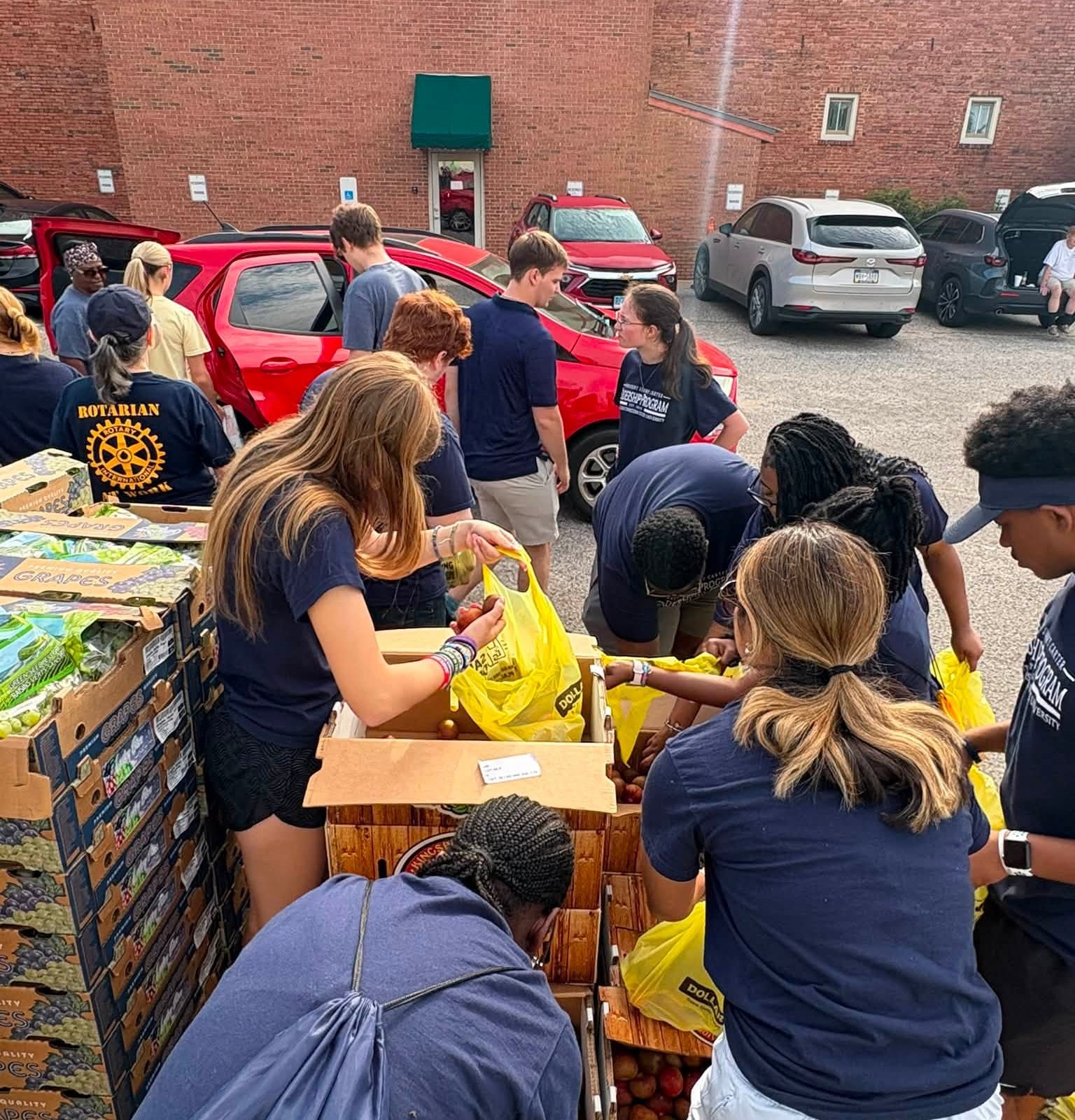
- Sarasota, Florida. For its Centennial Project, the Rotary Club of Sarasota funded a food pantry inside a new Boys & Girls Club in the Newtown community, placing food right where families already gather.
Notice what these projects have in common. Each one asked not only “What do people need?” but also “Who isn’t getting it, and why?”
For those of us in rural Georgia, the barriers can look different than they do in a big city. Sometimes the issue isn’t cost; it’s distance. Here are some ideas your club might consider:
- Map the gaps. Before choosing your next project, talk with your school system, health department, churches and food bank. Ask where people are falling through the cracks.
- Rides to care. Partner with local churches to organize volunteer drivers for medical appointments, pharmacy visits or grocery trips.
- Connect students and job seekers. Fund Wi-Fi hotspots that your public library can lend to families without home internet.
- Bring the services to the people. Provide volunteers or transportation for the Georgia Dental Association’s free Mission of Mercy clinics, or work with local dentists on a school dental screening day.
- Give help with dignity. Place food pantries or “blessing boxes” where families already go, so no one has to ask for help in public.
Here’s a simple challenge for your club this month. Choose one project you already do and ask, “Who isn’t getting this, and why?” You may find that a small change in location, timing or partners opens the door to neighbors you have never reached. Then please share your stories with me so I can highlight them in future articles. (lauramcconatha@gmail.com)
Food drives, coat drives and school supply drives are important work, and we should keep doing them. Charity meets the need. Equity asks why the need exists in the first place. Rotarians, we are uniquely positioned to do both. When we make sure every neighbor can reach the resources they need to thrive, we aren’t just serving our communities; we are building peace, one pillar at a time.
October 21, 2026
Comments
This Year’s Posts:
- Oct 21: Charity Meets the Need. Equity Asks Why.
- Oct 21: Generations Gather in Henry County to Celebrate Peace, Unity and Community
- Oct 20: From Georgia to Europe: GRSP Friendships Last a Lifetime
- Oct 20: Power of Matching Makes Even More of a Difference
- Oct 19: Multiple Partners Sustain & Enhance a Global Grant Project
- Oct 19: North Fulton Raises the Roof with Habitat for Humanity!
- Oct 19: Support Be the Voice Program in Our Schools
- Oct 19: Tyrone Founders Day 5K Supports Local Community!
- Oct 19: Peachtree City Wins 2026 Citizens Choice Award
- Oct 19: Peachtree City Celebrates Miss Georgia 2026 and Her Service Initiatives
- Oct 7: NAPA's Royal International Ball Returns, Bigger Than Ever
- Oct 7: NAPA Rowtarians Take on the Atlanta Dragon Boat Race
- Oct 7: Dougherty County Brings Books to Community Center
- Oct 1: Introducing GRSP Connect Newsletter
- Oct 1: 29th Annual Mayor’s Corporate Challenge Breaks Records in Alpharetta
- Sep 30: Domestic Violence Awareness Month
- Sep 30: Growing Membership: Increasing Rotary’s Impact
- Sep 30: October ... A Time to Celebrate, Consider Opportunities and Act
- Sep 30: Rotary Means Business Returns to D6900
- Sep 30: Muscogee-Columbus Hosts Oyster Roast
- Sep 28: Atlanta Southern Crescent: Where Tacos Meet Self-Defense!
- Sep 27: Find Your Voice: Why Every Rotarian Should Attend RLI
- Sep 27: Every Act of Service is an Act of Peace
- Sep 27: A Rotary Legacy Four Generations Strong
- Sep 27: Are You Barcelona Bound?
- Sep 27: Two Rotarians. Two Cultures. One Conversation.
- Sep 27: More Than 350 Million Reasons to Give to The Rotary Foundation ...
- Sep 27: World Polio Day - October 24!
- Sep 27: Nominations for 2029-2030 District 6900 District Governor Due By 10/31
- Sep 26: North Cobb - Where Service Meets Social
- Sep 26: North Cobb Joins 9/11 Field of Flags
- Sep 26: Roswell Responds to Michigan Rotarian Request for Help
- Sep 26: Countdown to GLL Founders Day Celebration
- Sep 25: Atlanta West End: Service Above Self on the Westside BeltLine
- Sep 25: Vinings Cumberland Helps Bring Tandem Cycling to Blind Athletes
- Sep 23: We Can Help! Forty Clubs Share Easy Polio Initiatives
- Sep 23: Emory Druid Hills Grant Equals More Than School Supplies
- Sep 4: Maciej Derecki Continues a GRSP Legacy in Newnan
- Sep 3: Henry County Turns Used Medical Equipment into Renewed Independence
- Sep 2: Steve Ivory Joins GRSP Foundation Board
- Sep 2: RYLA Club Registration Now OPEN
- Aug 31: The Eight Pillars of Peace
- Aug 31: Introducing Laura McConatha
- Aug 31: Support Relief Efforts in Nepal
- Aug 31: Join the Return to Oz ... Asheville 2027
- Aug 31: Thank You Rotary People of Action!
- Aug 31: September is Basic Education and Literacy Month
- Aug 31: Georgia Rotary Student Program Celebrates 80 Years of Bringing Nations Together
- Aug 31: East Cobb's Dog Days Run Raises $77,550 for Community
- Aug 28: District Newsletter Editor Wanted for 2027-28 Rotary Year
- Aug 28: 30 Years Running for a Reason
- Aug 26: Roswell’s Big Connect Yields Big Help To Local Causes
- Aug 26: Rotary Clubs Support Life-Changing Cleft Care in Bolivia
- Aug 25: Great Start to a New Contest Year
- Aug 25: The Early Bird Catches the Worm!
- Aug 25: From Idea to Tee Box: Meriwether Rotary Gets Ready to Play “Par for a Purpose”
- Aug 25: Every Rotarian, Better Rotarian
- Aug 25: Columbus-Muscogee Full of Rotary Adventure
- Aug 24: NAPA Gives Back: 205 Backpacks, 205 Kids Ready for School
- Aug 24: Think About This Fundraiser Idea ... and Share Yours
- Aug 24: Paul Harris Lives On!
- Aug 24: Community Awareness: Understanding the Impact of Opioids and Substance Abuse
- Aug 24: Peachtree City Back to School Bash Helps Students Succeed
- Aug 21: North Fulton Installs Landscaping for Habitat Home
- Aug 21: How Far We’ve Come in Such a Short Time!
- Aug 21: Rotary Welcomes 2026-27 RYE Students
- Aug 19: Carrollton-Dawnbreakers Fill Little Free Pantries
- Aug 19: Become a CPR & AED Instructor
- Aug 19: Congratulations to 2026-2027 Competitive Grant Recipients!
- Aug 19: Dougherty County Featured on WALB Town & Country
- Aug 10: Share Your Ideas with Rotary International
- Aug 2: Atlanta Southern Crescent Help Kindergartener Begin School Year with Confidence
- Jul 27: Paulding County Boasts Friendships, Commitment to Community
- Jul 27: North Columbus Completes Clean & Green Sanitation Hub in Nepal
- Jul 27: Off to a Great Start!
- Jul 27: The Start of New Year
- Jul 26: Disaster Relief Appeal
- Jul 25: While We're Talking Polio: Let's Make October 24 Count
- Jul 25: Atlanta Ascent Joins District 6900's Rotary Family
- Jul 25: North Cobb Supports Kids2Leaders Camp; Addresses Hunger Issues
- Jul 25: Welcome the North Cobb Hero Duck!
- Jul 25: Peachtree City Rotary Creates Lasting Impact Through Community Grants and Service
- Jul 25: When History Touches "The Now"
- Jul 25: Join Us at June 2027 Rotary International Convention: Barcelona, Spain
- Jul 25: New School Year, New Opportunity for Student Voices
- Jul 23: GRSP Elects FY27 Leadership, Honors Emeritus and Welcomes Class of 2026-27
- Jul 23: Why RLI Matters: And Why You Should Be There
- Jul 23: Heart Behind the Pin: Honoring Service and Legacy of Carrollton Rotarian Jim Gill
- Jul 22: Buckhead's Year Begins with Sleeves Rolled Up
- Jul 22: Create Lasting Impact through CPR Training
- Jul 21: Join Us in Honduras ... A Journey of Joy
- Jul 21: NAPA Welcomes DG Cynthia Dorsey Edwards
- Jul 21: Roswell’s “Connections Challenge”
- Jul 21: North Fulton Provides Back Packs and School Supplies
- Jul 20: Three Clubs Partner to Serve The Table on Delk
- Jul 19: Happy 100 Years to RC of Blakely!
- Jul 7: Atlanta Brasil Hosts World Cup Watch Party
- Jul 7: Dunwoody Presents Fourth of July to Remember!
- Jul 7: Griffin Daybreak and Griffin Team Up to Beat the Heat
- Jul 2: Better Than Your Best
- Jul 2: Doggone Good Time Had By All!
- Jul 1: Join Us in Asheville for the 2027 District 6900 District Conference
- Jul 1: Join Us in Asheville for the 2027 District 6900 District Conference
- Jul 1: Thanks for a Year Well Done!
- Jul 1: Rotary International President Visits District 6900
- Jul 1: North Cobb Helps Feed and Refresh the Community
- Jul 1: Welcome to Our New Rotary Year!
- Jul 1: Emory Druid Hills Celebrates Club Leadership
- Jul 1: Welcome Our New RLI Directors